7 Bin Cleaning Tips for Clean, Odour-Free Bins
Dirty bins are more than just unpleasant. They can smell, attract flies and pests, and create a build-up of bacteria from food scraps, liquids and general waste. For Perth homes, businesses, schools and shared properties, keeping bins clean is an easy way to improve hygiene and make outdoor waste areas more manageable.
The good news is that clean bins do not need to be complicated. A few simple habits can reduce odours, stop grime from building up, and make wheelie bin cleaning easier between professional cleans. Here are seven practical bin cleaning tips to help keep your bins fresher for longer.
1. Start With the Easiest Bin Cleaning Tip: Clean on Collection Day
The best time to clean your bin is straight after it has been emptied. On collection day, the bin is lighter, easier to move, and free from most loose waste.
This makes it much easier to rinse out leftover residue before it dries onto the base or sides of the bin. It also means you are not trying to clean around bags, loose rubbish or food scraps.
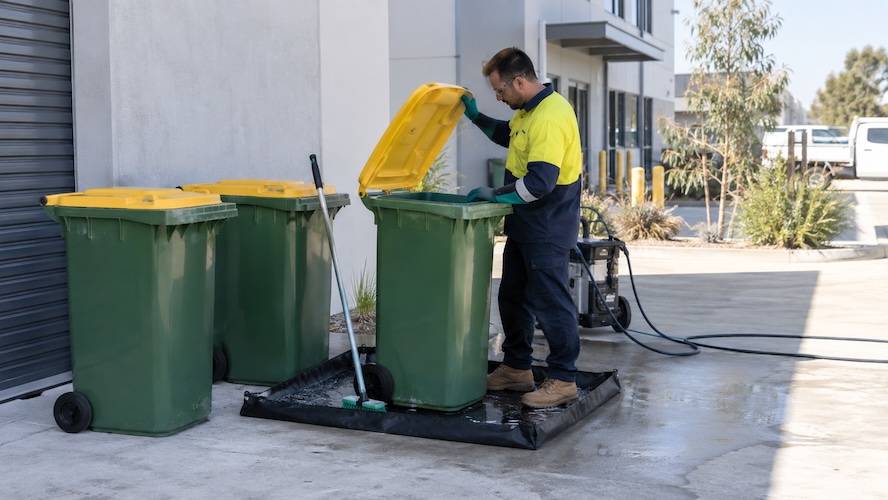
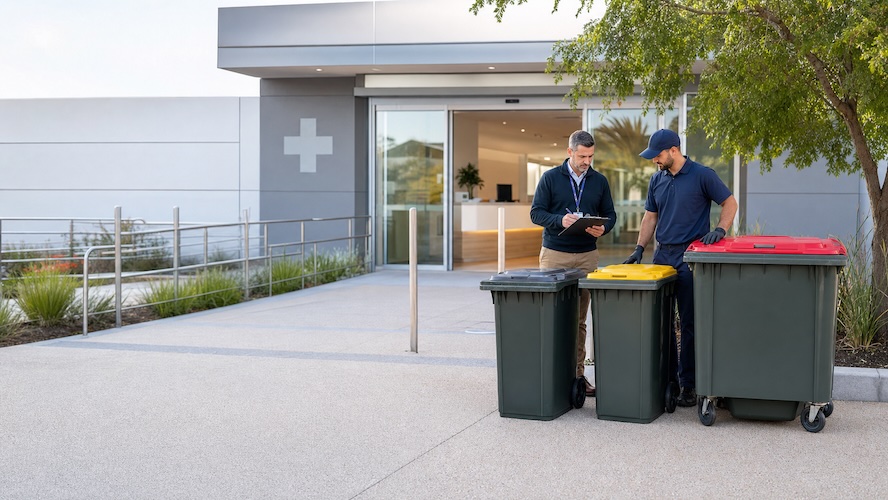
For households, this might mean giving the bin a quick rinse once it comes back from the kerb. For businesses, strata complexes or schools, it means scheduling bin cleaning around waste contractor collection times so bins can be cleaned while they are empty and ready for use again.
2. Rinse Before Waste Builds Up
One of the simplest ways to maintain clean bins is to rinse them before waste has a chance to harden, rot or stick.
Food scraps, leaking rubbish bags, drink spills and packaging residue can quickly settle at the bottom of a bin. Once this layer dries, it becomes harder to remove and is more likely to produce strong odours.
A quick rinse can help remove fresh residue before it becomes a bigger problem. Use a hose where suitable, tip out excess water safely, and avoid letting dirty runoff flow into areas where people walk, park or gather.
For shared sites, such as apartment complexes or commercial bin areas, regular rinsing can help reduce odour between scheduled professional cleans.
3. Use a Disinfectant, Not Just Water
Water can remove loose waste, but it does not properly sanitise the inside of the bin.
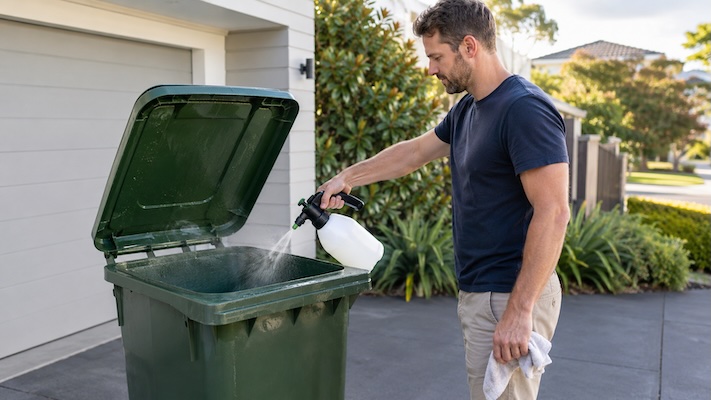
For better bin hygiene, use a suitable disinfectant after rinsing out visible dirt and residue. Always follow the label directions and avoid mixing chemicals, especially bleach with other cleaning products.
The order matters. Clean first, then disinfect. If the inside of the bin is still coated with grime, disinfectant may not work as well because it cannot properly reach the surface underneath.
After disinfecting, leave the bin open long enough to dry where safe and practical. A dry bin is less likely to develop strong smells than one that stays wet and warm.
4. Do Not Overfill Your Bin
Overfilled bins are harder to keep clean.
When rubbish is packed too tightly, bags can split, lids may not close properly, and loose waste can scrape down the inside walls of the bin. This is one of the most common reasons bins become stained, sticky and smelly.
Keeping waste below the rim makes the bin easier to empty and reduces the chance of rubbish getting caught under the lid or around the hinges. It also helps stop birds, insects and other pests from getting inside.
For businesses and shared properties, overflowing bins are often a sign that collection frequency or bin capacity needs to be reviewed. If bins are regularly packed full before collection day, you may need more bins, larger bins or a more frequent waste service.
5. Use Bin Liners Every Time
Bin liners are one of the easiest ways to reduce direct contact between waste and the inside of the bin.
A good liner helps catch food scraps, liquids and loose rubbish before they stick to the bin surface. This makes cleaning easier and helps prevent odours from building up between collection days.
The key is to use liners properly. Make sure bags are tied securely before they go into the bin, especially if they contain food waste, nappies, pet waste or anything likely to leak.
For homes, liners are useful for general household waste. For workplaces, schools and strata properties, they can make a noticeable difference in shared waste areas where many people are using the same bins each day.
6. Keep Lids Closed to Block Pests and Sun
Keeping the lid closed sounds simple, but it makes a big difference.
An open bin gives flies, birds, rodents and insects easier access to waste. In Perth’s warmer months, it also allows direct sun and heat to speed up odour issues, especially when food scraps or wet waste are inside.
Check that bin lids are not jammed open by overfilled bags or bulky rubbish. If a lid is cracked, broken or no longer closing properly, arrange a replacement through the relevant council, waste provider or property manager.
For commercial sites and shared bin areas, closed lids also help make the space look cleaner and more professional. That matters for staff, tenants, customers and visitors.
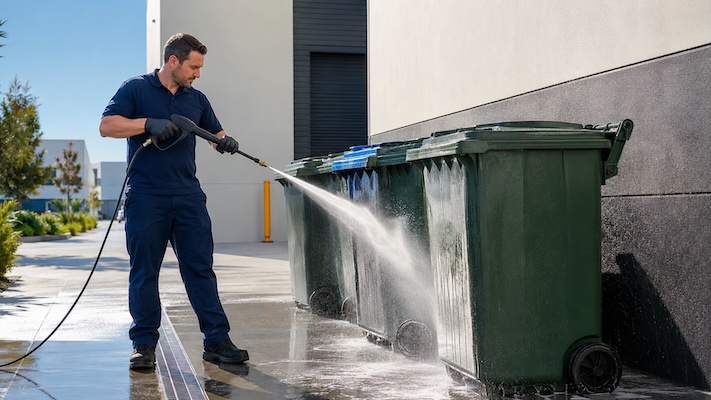
7. Book a Professional Clean at Least Once a Month
Even with good habits, bins still need a deeper clean.
A monthly professional clean helps remove built-up grime, bacteria, residue and odour that regular rinsing may not fix. This is especially useful for bins used by multiple people, high-volume waste areas, food-related businesses, schools, childcare facilities, strata properties and commercial sites.
Professional wheelie bin cleaning also saves time. Instead of staff, tenants or homeowners dealing with dirty bins, the cleaning can be handled by trained technicians with the right equipment and cleaning process.
For shared properties, Super Clean Bins provides strata bin cleaning across Perth to help body corporate managers and property managers keep bin rooms and waste areas cleaner. Schools, universities and education sites can also arrange scheduled education bin cleaning to support better hygiene across busy campuses.
FAQs About Bin Cleaning Tips
How often should I clean my bins?
For most homes, a quick rinse after collection day and a deeper clean once a month is a good starting point. Businesses, strata properties, schools and high-use sites may need more frequent cleaning depending on waste volume and odour issues.
What is the best way to clean bins?
The best way to clean bins is to remove loose waste, rinse visible grime, apply a suitable disinfectant, scrub problem areas, rinse again if needed, and allow the bin to dry. Always follow product directions when using cleaning chemicals.
Why do bins still smell after being emptied?
Bins can still smell after collection because liquid, food residue and bacteria remain on the base, sides, lid or hinges. If these areas are not cleaned properly, odours can return quickly, especially during warm Perth weather.
Is professional bin cleaning worth it?
Yes, professional bin cleaning is worth it if bins are heavily used, shared by multiple people, or difficult to keep clean. It saves time, improves hygiene, and helps reduce odours in homes, businesses, strata properties and education facilities.
Keep Your Bins Cleaner With Less Hassle
Keeping up with bin cleaning takes time, especially when bins are used every day or shared across a busy property. Small habits like rinsing on collection day, using liners and keeping lids closed can help, but regular professional cleaning gives you a deeper and more reliable result.
Super Clean Bins provides professional bin cleaning and bin washing services across Perth, using biodegradable cleaning solutions and responsible wastewater disposal practices. You can learn more about the team on the About Us page, or contact Super Clean Bins to arrange a quote for your property, business or facility.