Our 7 best tips for cleaning recycling bins
The recycling truck has been, but there is still a sticky patch at the bottom of the bin. Cleaning recycling bins means dealing with what collection leaves behind, not just waiting for the next pick-up.
For Perth workplaces, schools and shared properties, the aim is straightforward: clean the bin properly, manage the wash water and reduce the residue going back into it.
Knowing how to clean a recycling bin starts with a few straightforward steps. These seven tips cover the cleaning process and the everyday recycling habits that help keep your efforts from going to waste.
Quick summary
- Clean after collection: Wash the bin while it is empty, before it starts filling up again.
- Use a suitable detergent and a long-handled brush: Scrub the inside walls and base to remove sticky residue.
- Remember the lid, rim and handles: Clean these easily missed areas as well as the bin’s interior.
- Contain and dispose of wash water correctly: Use approved wastewater arrangements, never gutters or stormwater drains.
- Let the bin dry before reuse: Allow it to dry completely before adding more recycling.
- Empty and rinse containers: Remove leftover food and drink from accepted containers before recycling them.
- Keep recyclables loose and follow collection rules: Avoid bagging standard WA kerbside recycling, and check your waste contractor’s requirements for commercial bins.
Before you start cleaning recycling bins
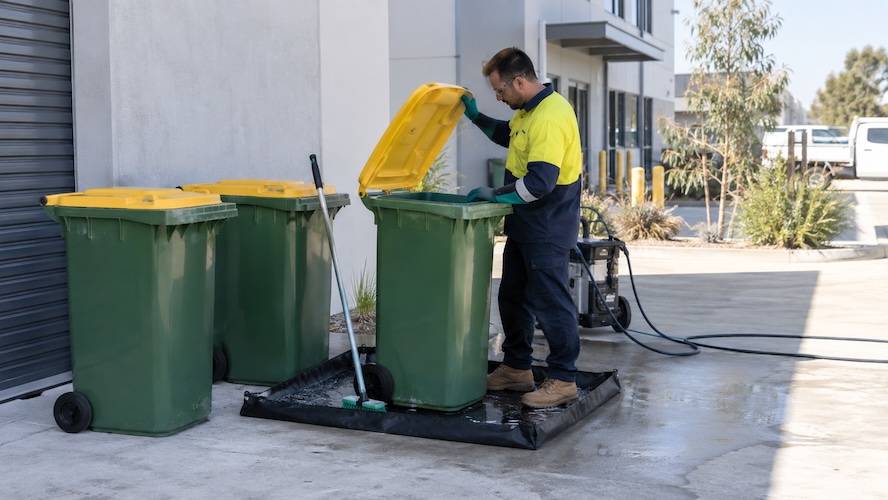
Set up a suitable washing area before turning on the hose. Decide how you will contain and dispose of the wash water, and keep the work area clear of pedestrians.
Have a long-handled brush, a suitable detergent and the protective equipment required by the product instructions and your workplace procedures. Wear appropriate gloves and closed footwear.
These tips are for bins you can safely access and handle. Do not climb inside a bin, reach blindly into leftover material or attempt to tip a large commercial bin by hand. Report sharp objects, damaged edges or unknown substances to the person responsible for waste management.
1. Clean the bin after it has been emptied
Plan the clean for after collection, before people begin filling the bin again. Check that the contents have actually been removed rather than relying only on the collection timetable.
Use suitable tools to remove accessible loose material before washing. Keep anything removed contained and place it in the correct waste stream.
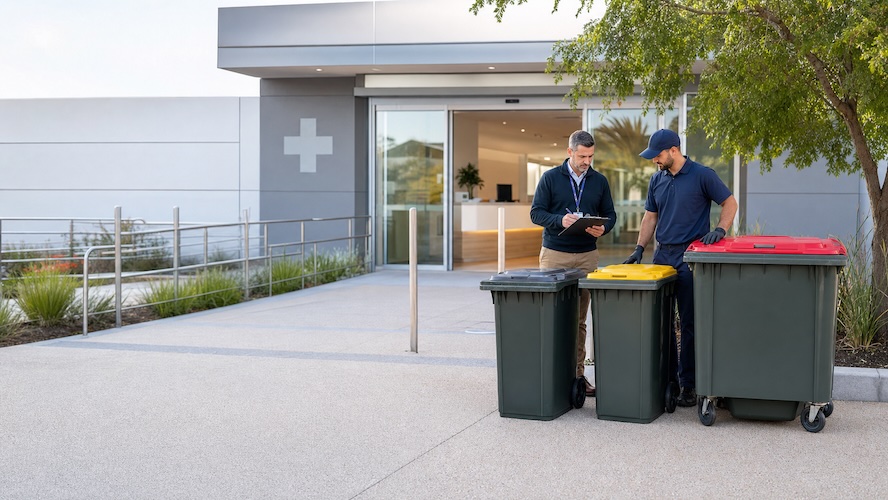
At an office or strata property, nominate someone to check the bins and tell the cleaning team when they are ready. Include access instructions, especially where bins sit behind locked gates.
For education sites, our bin cleaning for schools service can be coordinated around collections, site access and school holiday scheduling.
2. Use a suitable detergent and a long-handled brush
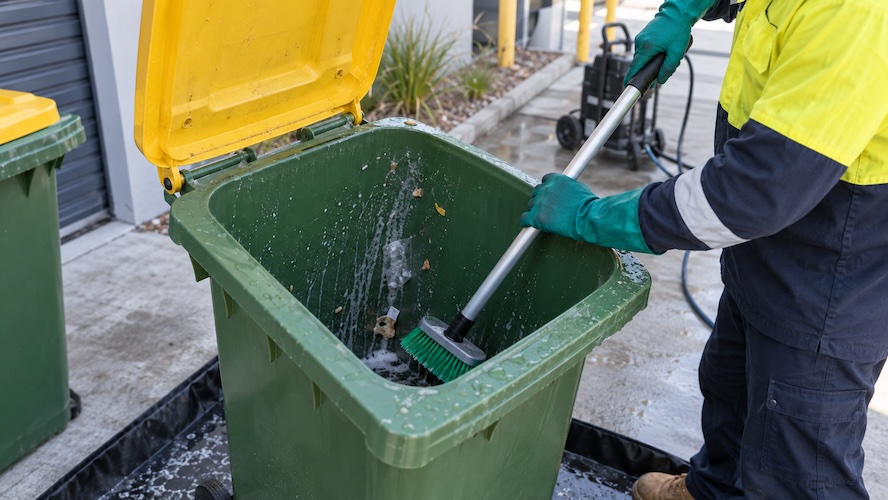
Start with a detergent suitable for the bin material and follow its dilution instructions. Wet the affected surfaces, then use a long-handled brush to work over the inside walls and base. Detergent and a long-handled cleaning tool are also recommended in council bin-washing guidance.
Pay attention to visible residue rather than simply spraying water over it. Work methodically around the bin so you can see which areas still need attention.
Do not add extra products to make the solution “stronger”. Never mix cleaning chemicals. Follow the product label, including any instructions about protective equipment, rinsing and safe use.
3. Remember the lid, rim and handles
The inside of the bin is only part of the job. Include the underside of the lid, the rim and the handles in your cleaning routine.
Check accessible corners and recesses, particularly where you can see dried splashes or sticky marks. Use a separate cloth or suitable smaller brush for areas the long-handled brush cannot reach comfortably.
For a shared recycling station, make the final check simple: inspect the inside, lid and handles before marking the task complete. Do not rely on how the bin looks from a distance.
4. Contain the wash water and dispose of it correctly
A nearby drain is not automatically a suitable disposal point. Do not hose dirty bin water into road gutters or stormwater drains. Environmental regulators specifically warn against washing bin waste into the stormwater system.
For Perth businesses, Water Corporation’s trade waste permit guidance explains that approval is required before discharging trade waste into its sewer system. The permit sets out the conditions for that discharge.
Use your site’s approved washing and wastewater arrangements. Where these are unclear, check with the facilities manager before starting.
Without a suitable way to contain and dispose of wash water, arrange a cleaning provider that can manage it. Moving the mess from the bin to the car park is not a finished job.
5. Let the recycling bin dry before using it again
After cleaning, rinse as directed by the product instructions. Remove the remaining wash water through your approved process, then allow the bin to dry before putting it back into use. Council bin-care guidance recommends letting bins dry completely before refilling them.
Build drying time into the job rather than making washing the final task before everyone arrives for work.
Leave the bin in a secure position where it will not block a doorway, walkway or collection route. Once dry, check that no tools or cleaning materials have been left inside, then return it to its usual place.
6. Empty and rinse containers before recycling them
Cleaning the bin is one task. Preparing the items that go inside it is another.
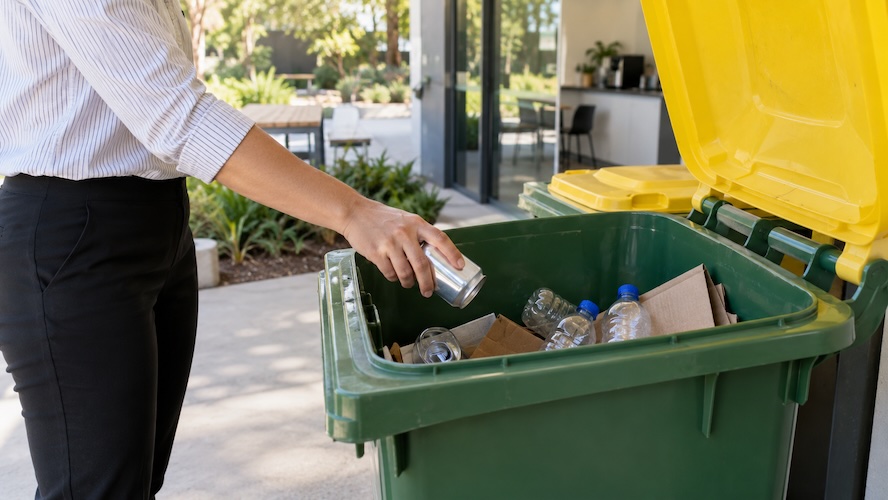
WA’s kerbside recycling guidelines say containers should be empty and rinsed free of food residue. That includes accepted items such as plastic milk bottles, yoghurt tubs and food tins.
At a workplace, place a clear reminder near the kitchen recycling point. Ask people to empty containers and rinse away remaining food before recycling them.
Check the habit, not just the bin. A freshly washed bin will not stay clean for long if the next person tips leftover yoghurt into it.
7. Keep recyclables loose and follow your collection rules
Do not automatically apply general-waste advice to a recycling bin. For standard WA kerbside recycling, items should go in loose, not tied inside plastic bags.
A liner may seem like a way to avoid cleaning, but bagging the recycling is not the answer. Instead, focus on correctly prepared containers and cleaning the bin when needed. For commercial premises with a private collection service, ask the contractor which materials it accepts and how they should be presented. Use those instructions when preparing signs for staff or tenants.
Make one person responsible for checking the recycling area and updating the signs. For example, an office manager could check the kitchen recycling point during routine facilities inspections rather than waiting for a complaint.
FAQs about cleaning recycling bins
How often should recycling bins be cleaned?
Base your schedule on how the bins are used, their condition and your site’s requirements. Check for residue after collection and arrange cleaning when needed. Record repeat problems so you can adjust the routine, rather than choosing a fixed interval and ignoring what is happening between cleans.
Do recycling bins need disinfecting after every clean?
Follow your site’s hygiene procedure rather than assuming every bin needs the same treatment. Where disinfection is required, use a suitable product exactly as directed, including the specified contact time. Cleaning away visible residue should not be replaced with a quick spray intended only to add fragrance.
Can I use a pressure washer to clean a recycling bin?
A pressure washer is not essential; council guidance also describes cleaning with a garden hose, detergent and a long-handled brush. Before using pressure equipment, check that the bin and equipment are suitable, the operator is trained and the site can contain the wash water.
Can I put a liner in my recycling bin?
For standard WA kerbside recycling, keep recyclables loose rather than placing them in a plastic liner or tied bag. For a privately collected commercial bin, confirm the requirements with your waste contractor. Do not assume that a bag labelled “compostable” is accepted in the recycling collection.
Keep your recycling bins clean with Perth’s bin cleaning experts
Rinsing containers and keeping the right items in your recycling bin can make cleaning easier, but residue still needs attention. When multiple bins, limited staff time or wastewater arrangements make the job difficult, it helps to have a specialist handle the clean.
Super Clean Bins provides commercial bin cleaning across Perth for workplaces, schools and shared properties. Our trained, fully insured technicians use biodegradable cleaning solutions, with responsible wastewater disposal managed under our trade waste permit.
We coordinate cleaning around your council or waste contractor’s collection days, with flexible service frequencies to suit your site.
Request a recycling bin cleaning quote and tell us your location, bin sizes and collection schedule.