Why Your Bin Still Smells After Collection
The rubbish truck has emptied your bins, but the smell remains. For Perth businesses and strata properties, this can mean unpleasant trips to the waste area, staff complaints and odours reaching nearby entrances.
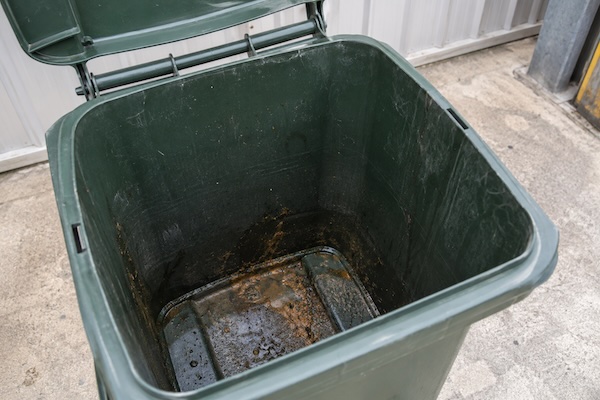
If you are wondering how to get rid of bin smell, start by checking what collection leaves behind. Food residue, grease and dirty liquid can stick to the container after the bags and loose rubbish have gone.
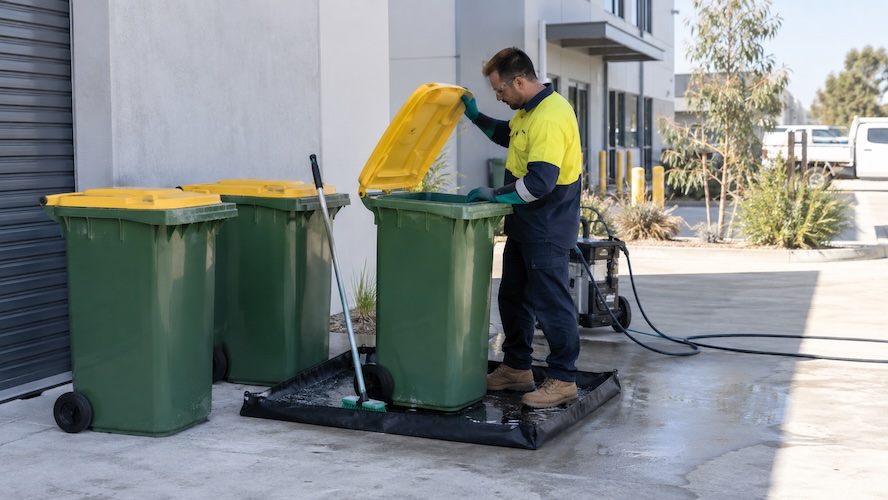
At Super Clean Bins, we clean existing bins for commercial, industrial, strata, healthcare and education properties across Perth. Here is how to identify lingering odours and keep your bins cleaner between washes.
Quick summary
- Rubbish collection removes waste but can leave residue inside the bin.
- Food deposits, grease and dirty liquid can cause smells after emptying.
- Check the base, internal walls, lid and rim for contamination.
- Remove the source of the smell before using deodorising products.
- Keep lids closed and prevent leaking rubbish bags.
- Adjust cleaning frequency if odours return between services.
- Investigate the surrounding area if clean bins still sit in a smelly waste room.
Why empty bins still smell
An empty bin can contain material that continues to break down and produce odours. Even a thin layer of food residue can leave a noticeable smell.
Food sticks to internal surfaces
Torn bags and loose scraps can leave food on the base and walls. Collection removes most of the contents, but sticky or dried-on deposits may remain.
In a busy workplace, staff might add fresh rubbish before anyone checks the empty container. Over several collections, more residue builds up beneath the bags.
This is one reason a bin can smell straight after emptying, even before anyone puts new waste inside.
Liquids remain at the bottom
Drink leftovers, leaking packaging and wet rubbish can leave dirty liquid inside the container.
Look for damp patches or a sticky layer after collection. Avoid leaning into large bins to inspect them. If you cannot see the base from a safe position, leave the inspection to your cleaning provider.
Lids and rims collect spills
The bottom of the bin is only one place to check. Food and liquids can also collect beneath the lid, around the rim and near the opening.
A bag may catch on the edge or leak as someone lifts it into the container. Washing the base alone leaves these deposits behind.
Heat makes the problem worse
Food waste and moisture can become particularly unpleasant in warm weather. Containers standing in direct sun may smell more noticeable as the day warms up.
The City of Canning recommends storing bins in shade and cleaning them regularly to help manage odours.
For a Perth property with limited shade, consistent cleaning and careful waste handling become particularly useful.
How to get rid of bin smell
Start by identifying and removing the material responsible for the odour.
1. Inspect after collection
Check accessible parts of the empty bin for food deposits, dirty liquid and greasy patches. Include the lid and rim in your inspection.
If you manage several containers, note which ones smell and what waste they hold. You may find that one food-heavy bin needs attention while the others remain relatively clean.
Do not reach into unknown waste or handle sharp objects. Follow your workplace procedures and report hazardous material to the appropriate person.
2. Arrange a thorough wash
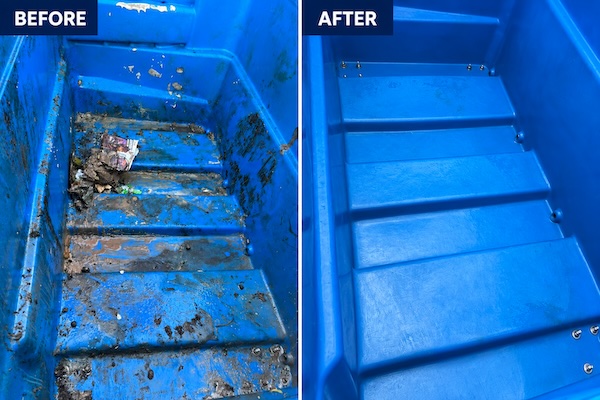
A quick rinse can remove loose dirt while leaving grease or hardened food behind. Cleaning needs to address the deposits attached to the bin’s surfaces.
If staff have rinsed a container but the smell persists, check whether they reached the underside of the lid, corners and internal walls.
For larger containers or multiple bins, our commercial bin washing for Perth businesses helps remove built-up grime from the bins already at your property.
Arrange access after collection, before staff or tenants begin filling the containers again.
3. Deodorise after cleaning
A pleasant fragrance does not confirm that a bin is clean.
If food residue remains, the smell may return once the fragrance fades. Use deodorising as a finishing step after removing the contamination responsible for the odour.
Staff using cleaning products should follow the manufacturer’s instructions and workplace procedures. Never mix cleaning chemicals.
4. Review the cleaning interval
If smells return well before the next wash, review the gap between services.
Consider whether your property now has more staff, additional tenants or increased food preparation. Changes in waste handling, such as bags leaking more often, can also affect bin cleanliness.
For example, a shared office bin receiving takeaway leftovers each day may need more attention than a similar-sized container holding dry packaging.
Our guide to choosing a suitable bin cleaning frequency covers another useful part of maintaining clean containers: matching the schedule to how people use them.
Find the likely source
Use the table below to decide what needs attention before booking another wash or changing your routine.
| What you notice | What to check | Next step |
| Smell immediately after collection | Residue or liquid inside the empty bin | Arrange cleaning of the affected surfaces |
| Strong odour near the opening | Spills beneath the lid and around the rim | Include these areas in the wash |
| Smells returning soon after cleaning | Leaking bags, loose food or a long cleaning interval | Review disposal habits and scheduling |
| Odour beneath the container | Leaks, floor spills or bin damage | Report damage and arrange suitable area cleaning |
| Smell throughout the room despite clean bins | Other waste, dirty surfaces, drainage or ventilation issues | Ask the property manager to investigate |
Bin washing addresses contamination on the container. Persistent smells elsewhere may need separate cleaning or maintenance.
For example, washing a bin will not remove liquid that has leaked onto the floor beneath it.
Keep bins cleaner between washes
Daily waste handling can make a difference to how much residue remains after collection.
Keep lids closed
Close lids after use and avoid filling containers above the point where they can shut.
Report broken lids to the bin owner or waste contractor. An open or damaged lid can give pests access and allow rainwater into the container.
Reduce leaking bags
For bagged general waste, use suitable bags and avoid overloading them. Check for sharp packaging that could tear the plastic.
Follow your collection provider’s instructions for recycling and organics. These waste streams may require different arrangements, including loose materials or approved liners.
Keep unwanted liquids out
Follow your workplace procedures for disposing of drinks, cooking oils and other liquids.
Tipping them into a rubbish bin can create spills and leave residue that collection will not remove.
Report spills promptly
Make sure staff know who handles spills and who to contact about damaged containers.
At shared properties, a clear reporting process helps strata managers identify recurring problems. One tenant may notice a leaking bin long before anyone else knows it needs attention.
The City of Rockingham’s food premises waste hygiene guidance also recommends cleaning bins and enclosures and arranging collection often enough for lids to remain closed.
Professional bin washing in Perth
At Super Clean Bins, we wash, sanitise and deodorise existing bins for businesses and shared properties across the Perth metropolitan area.
We use biodegradable cleaning solutions and hold a trade waste permit for responsible wastewater disposal. Our team arranges cleaning around council or waste contractor collection days, when the containers are empty.
We clean plastic bins from 120L to 1100L and metal bins from 1.5m³ to 6.0m³. If your property has different sizes, include each type and quantity in your enquiry.
You can explore our bin cleaning services by property type to find information relevant to your site.
Frequently asked questions
Why does my bin smell when empty?
Food residue, grease and dirty liquids can remain after collection. Check the internal walls, base, lid and rim for deposits that need washing.
Will a deodoriser remove bin smells?
A deodoriser may help manage odours, but it does not replace cleaning. Remove food deposits and other contamination before applying a suitable product.
How often should commercial bins be washed?
The interval depends on waste type, usage and how quickly residue builds up. Review your schedule if smells return between cleans or your property starts producing more food waste.
Do recycling bins need cleaning?
Yes, when spilled drinks or food residue make them dirty. Emptying a recycling bin does not remove sticky deposits attached to its surfaces.
What if the waste area still smells?
Check nearby surfaces and other containers. Ask your property manager to investigate persistent leaks, drainage problems or poor ventilation if the smell remains after bin cleaning.
Get help with smelly bins
If your bins smell straight after collection, check what remains inside them. A thorough wash can remove deposits that emptying leaves behind, while a suitable cleaning schedule helps prevent repeated build-up.
Request a tailored bin cleaning quote from Super Clean Bins. Tell us about your Perth property, bin quantities, collection days and the odour problem you need addressed.