A Practical Bin Hygiene Checklist for Perth Healthcare and Aged Care Facilities
Cleanliness in healthcare does not stop at consultation rooms, corridors and reception areas. General-waste and recycling bins also need regular attention—particularly when they are shared across busy hospitals, medical centres, aged-care homes and allied-health facilities.
Even when a bin is emptied on schedule, residue can remain on its interior walls, base, lid, handles and wheels. Over time, this build-up can produce persistent odours, attract pests and make waste areas unpleasant for employees, patients, residents and visitors.
A planned approach to healthcare bin hygiene helps facility managers identify issues early and maintain a more consistent standard across their sites.
The following checklist covers the practical steps involved in inspecting and maintaining general-waste and recycling bins at healthcare facilities.
Quick Healthcare Bin Hygiene Checklist
Facility and operations teams should regularly check:
- Every general-waste and recycling bin is identified and accounted for
- Bins are emptied according to the site’s waste schedule
- Bin interiors are free from visible residue and leaked waste
- Lids, handles, rims and wheels are clean
- Bins do not produce persistent odours after being emptied
- Bin-storage areas show no obvious signs of pest activity
- Damaged lids, wheels, cracks or drainage points are reported
- Cleaning is coordinated with waste-collection times
- Wastewater is managed and disposed of responsibly
- Cleaning dates and recurring issues are documented
- Clinical and infectious waste remains within the appropriate specialist waste stream
1. Identify Every Bin and Waste-Storage Area
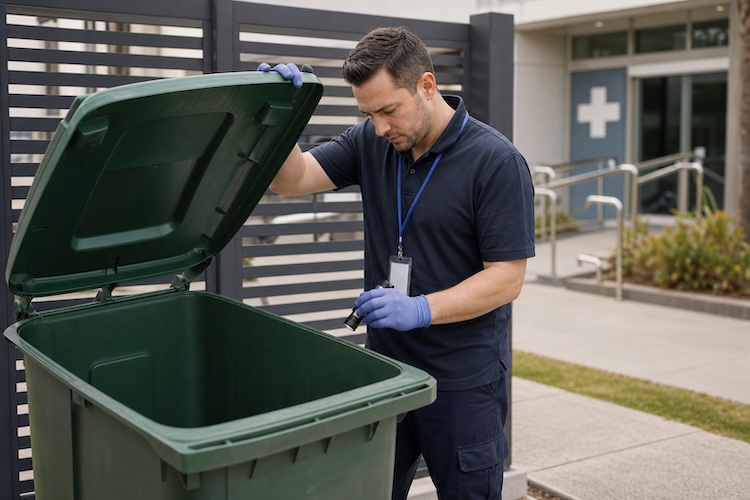
The first step is to understand exactly which bins are present across the facility.
Large healthcare sites may have multiple waste areas serving kitchens, offices, public areas, staff facilities and residential wings. Smaller medical centres may use only a few commercial bins, but each one still needs to be included in the cleaning schedule.
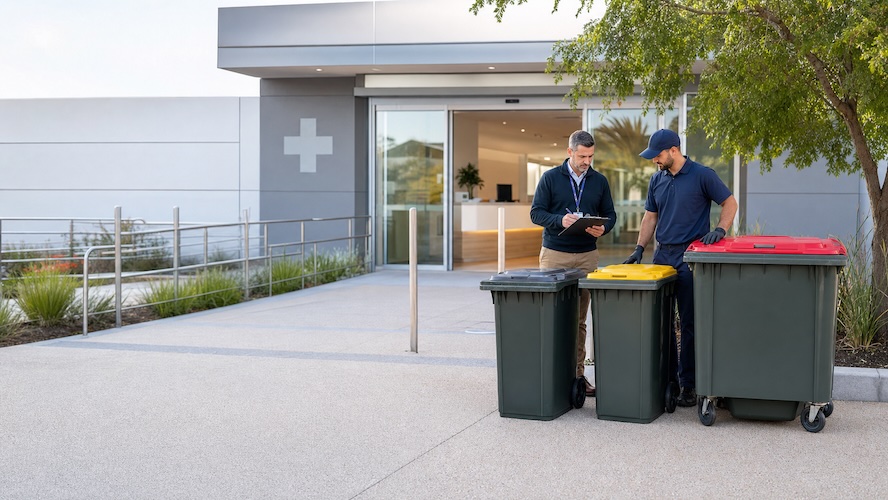
Create a simple register containing:
- The location of each bin
- The bin’s size and waste stream
- Its collection frequency
- The department or area it serves
- Any access requirements
- The person or contractor responsible for it
This prevents bins in less visible service areas from being overlooked. It also helps when requesting a quote for healthcare bin cleaning in Perth, because quantities, sizes and locations can affect scheduling and pricing.
2. Inspect the Interior After Collection
An empty bin is not necessarily a clean bin.
Liquid can leak from waste bags and collect at the bottom. Food scraps, packaging and other material may stick to the walls, lid or rim. A quick rinse may move loose debris without removing the underlying residue responsible for recurring odours.
Inspect bins after they have been emptied and look for:
- Material stuck to the bottom or sides
- Leaked liquids
- Greasy or sticky residue
- Discolouration and staining
- Moisture remaining between collections
- Mould-like growth
- Waste trapped around hinges or lid mechanisms
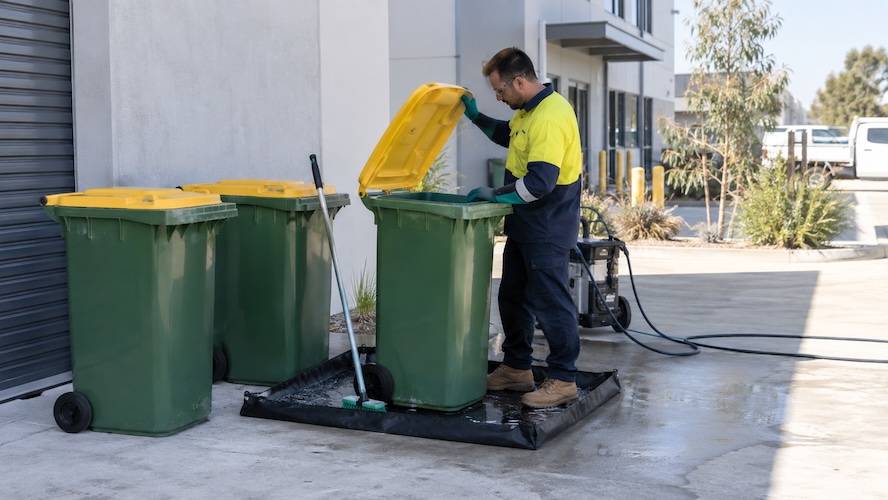
If residue remains after routine on-site cleaning, the bin may need a more thorough high-pressure clean, sanitising treatment and deodorising service.
3. Check Lids, Handles, Rims and Wheels
Cleaning efforts often focus on the inside of a bin, but exterior components also require attention.
Handles and lids are regularly touched when bins are opened, moved and returned to their storage areas. Wheels, axles and lower surfaces can collect dirt as bins move between waste bays and collection points.
Include the following components in every inspection:
- Lid surfaces and undersides
- Handles and handholds
- Hinges
- Bin rims
- Wheels and axles
- Drain plugs, where fitted
- Exterior walls
- Areas where bins contact one another
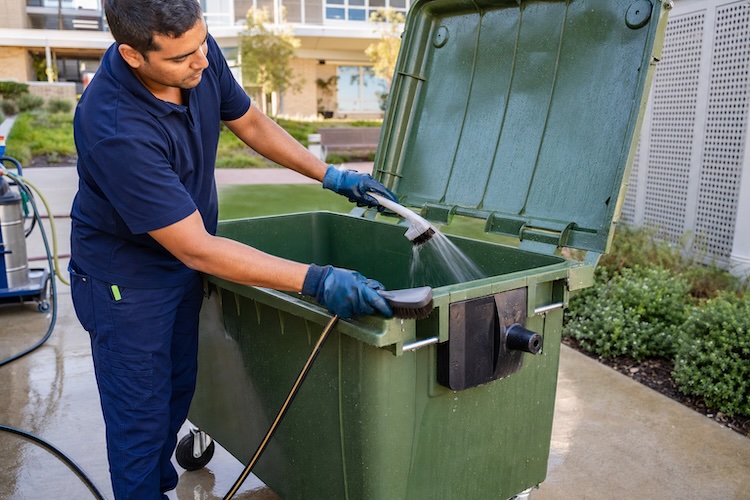
A complete professional service should address both the interior and exterior—not simply wash the most visible surfaces.
You can read more about the steps involved on the Super Clean Bins cleaning process page.
4. Investigate Persistent Odours
A bin may continue to smell even after the waste contractor has emptied it. This usually means the source of the odour remains on the bin itself or within the surrounding storage area.
Common causes include:
- Leaked food or organic waste
- Residue below the bin liner
- Waste trapped beneath the lid
- Moisture collecting at the base
- Infrequent cleaning during warmer weather
- A cracked or damaged container
- Spillage around the bin-storage area
- Deodorisers may temporarily mask the smell, but they do not remove physical build-up. Cleaning should target the source by removing stuck material, washing the bin thoroughly and applying an appropriate sanitising and deodorising treatment.
Perth’s warm conditions can make odour problems particularly noticeable, so facilities may need to review their service frequency during summer.
5. Look for Signs of Pest Activity
Waste residue can make bin-storage areas attractive to flies, cockroaches, rodents and other pests.
During routine inspections, look for:
- Increased numbers of flies around bins
- Cockroaches inside lids or hinges
- Droppings near the storage area
- Gnaw marks or damaged bin components
- Waste scattered around containers
- Holes beneath fences or screens
- Bins that cannot close correctly
- Persistent odours that may be attracting pests
Professional bin cleaning is not a replacement for licensed pest control. However, removing waste residue and odour from bins can help make the area less attractive to pests and support the facility’s broader pest-management program.
6. Review How Frequently Bins Are Cleaned
There is no single cleaning frequency suitable for every healthcare site.
The right schedule depends on:
- The number and size of bins
- The volume and type of general waste produced
- How often bins are emptied
- Whether food waste enters the general-waste stream
- The location and ventilation of the bin area
- Seasonal temperatures
- Previous odour or pest problems
- The facility’s internal procedures
A busy hospital or large aged-care facility may require more frequent cleaning than a small suburban medical practice. Some locations benefit from weekly or fortnightly service, while lower-volume sites may be adequately maintained on a monthly or scheduled periodic basis.
Rather than waiting for a serious smell or visible build-up, choose a frequency that prevents problems from becoming established. Your schedule can then be adjusted using inspection records and feedback from employees.
For broader guidance, see the Super Clean Bins bin-cleaning FAQs.
7. Coordinate Cleaning With Waste Collection
Commercial bins should generally be cleaned after they have been emptied.
Coordinating the cleaning visit with the facility’s waste-collection schedule allows technicians to access the interior properly and helps prevent freshly cleaned bins from immediately holding old waste.
Before arranging the service, confirm:
- The regular collection day and approximate time
- Whether collection times change on public holidays
- When bins are returned to the facility
- Whether the cleaning team can access the waste area
- Who should be contacted if collection is delayed
- Where each bin should be returned after cleaning
- Whether contractors must sign in or complete a site induction
Healthcare sites may also have restricted loading areas, delivery windows or sensitive operating periods. Providing these details in advance helps the cleaning service take place with minimal disruption.
8. Confirm How Wastewater Is Managed
Professional bin cleaning can produce wastewater containing dirt, residue and cleaning products. It should not simply be allowed to enter the nearest stormwater drain.
When assessing a provider, ask:
- Is wastewater captured during the service?
- Where is captured wastewater taken?
- What cleaning products are used?
- Are the products biodegradable?
- Does the team bring suitable commercial equipment?
- Is the work area left clean after the service?
Super Clean Bins uses biodegradable products and has the ability to capture wastewater for responsible disposal. More information about the service is available on the healthcare bin-cleaning page.
9. Report Damaged Bins
Cleaning cannot correct structural damage.
Cracks, damaged lids, broken wheels and missing drain plugs can allow liquid to escape, make bins difficult to move or prevent lids from closing correctly.
During each inspection, document:
- Cracks in the body of the bin
- Broken or warped lids
- Damaged hinges
- Missing drain plugs
- Wheels that do not rotate correctly
- Sharp or damaged edges
- Bins that are unstable when moved
Report damaged containers to the facility manager or waste provider so they can be repaired or replaced.
10. Maintain Basic Cleaning Records
A simple record makes it easier to demonstrate that bin cleanliness is being actively managed.
Records may include:
- Date of inspection
- Date of professional cleaning
- Bins or areas serviced
- Problems identified
- Damage reported
- Pest activity observed
- Corrective action taken
- Recommended date for the next clean
These records help facilities identify recurring issues and determine whether the existing cleaning frequency is sufficient.
For multi-site healthcare and aged-care operators, consistent records also make it easier to compare conditions across locations.
General-Waste Bin Cleaning Is Not Clinical-Waste Handling
It is important to distinguish commercial bin cleaning from specialist clinical-waste collection.
General waste, recycling, clinical waste, sharps and other regulated waste streams must be separated and managed according to the facility’s procedures and applicable requirements.
Super Clean Bins’ healthcare service focuses on cleaning emptied general-waste and recycling containers. It does not replace licensed clinical-waste collection, infectious-waste handling or the facility’s infection-prevention procedures.
Before engaging a cleaner, clearly identify:
- Which containers are included
- Which waste streams they hold
- Whether the bins will be completely emptied
- Any site-specific risks
- Access and induction requirements
- Containers that must only be handled by specialist providers
This distinction protects staff, contractors and the integrity of the facility’s waste-management system.
When Should You Arrange Professional Bin Cleaning?
Consider arranging professional healthcare bin cleaning when:
- Bins still smell after collection
- Residue remains after routine cleaning
- Staff are reporting unpleasant waste areas
- Flies or other pests are becoming more noticeable
- Bins have not been thoroughly cleaned for an extended period
- The facility lacks suitable pressure-washing equipment
- Wastewater cannot be responsibly managed on-site
- Cleaning results vary between departments or locations
- You need a reliable recurring schedule
- Perth’s warmer weather is making odours worse
A professional service can clean the interior and exterior of the bin, target difficult residue, sanitise and deodorise the container, and return it ready for use.
Professional Healthcare Bin Cleaning Across Perth
Super Clean Bins provides commercial bin cleaning for hospitals, medical centres, aged-care facilities and other healthcare providers throughout metropolitan Perth.
Services can be scheduled weekly, fortnightly, monthly, quarterly or as a one-off clean, depending on bin quantities, waste volumes and collection arrangements.
If you are reviewing bin hygiene at your facility, contact Super Clean Bins with:
- Your facility type and suburb
- The number of bins
- Bin sizes
- Waste-collection days
- Preferred cleaning frequency
- Site access requirements
- Any current odour, residue or pest concerns
Contact Super Clean Bins or call 0422 548 750 to discuss your healthcare facility and request an obligation-free quote.