How Often Should You Clean Your Bins?
Quick Summary: Bin cleaning frequency depends on your setting and how much food waste is involved. Households generally need a clean once a month, while food businesses should aim for weekly. Strata properties, schools, and healthcare facilities sit somewhere in between. The warmer the climate, the more often you should be cleaning. If your bin smells between collections, it is already overdue.
Why Bin Cleaning Frequency Matters
Bins are not just containers. When left uncleaned, they can become breeding grounds for bacteria, mould, odours, and pests.
Food residue, moisture, and warm weather create the conditions that flies, maggots, cockroaches, and bacteria need to build up quickly. This is especially common in Perth during the warmer months, when bins are stored in direct sun, enclosed bin rooms, loading areas, car parks, laneways, or shared waste compounds.
Regular bin cleaning helps remove odours at the source, reduce pest attraction, and keep surrounding areas more hygienic and presentable. For businesses, strata complexes, schools, and healthcare facilities, clean bins also reflect directly on how customers, tenants, staff, and visitors perceive the premises.
General Household Bins
For the average home, a monthly clean is a solid baseline. General waste bins collect food residue, liquid, packaging waste, and bacteria with every collection cycle. Even if the bin looks empty after collection day, residue often remains on the base, lid, handles, and inside walls.
In summer, heat speeds up decomposition and odour, so fortnightly cleaning is worth considering during warmer months, especially if your bins sit in direct sunlight or are stored close to your home. Check out our recent blog on cleaning bins during the summer heat.
Recycling bins tend to stay cleaner for longer, but they still benefit from a clean every 6 to 8 weeks. This is especially true if glass bottles, cans, cartons, or food-rinsed containers go in regularly.
Commercial and Retail Bins
Businesses generate more waste, more often, which means bins usually need cleaning more frequently than household bins.
For a full breakdown of what commercial bin cleaning involves, visit our Commercial and Industrial Bin Cleaning page.
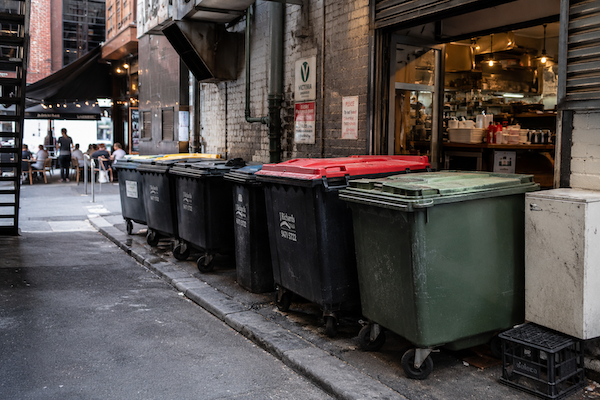
Weekly cleaning is recommended for cafes, restaurants, food service businesses, supermarkets, and any operation handling organic or perishable waste. Fortnightly cleaning suits most general retail environments, offices, warehouses, and light industrial facilities. Monthly cleaning is typically enough for low-traffic offices and storage facilities with minimal food waste.
The core rule is simple: the more food waste involved, the more frequently bins need to be cleaned.
Strata and Apartment Complexes
Shared bin areas are high-use, high-risk environments.
Multiple households using the same bins means waste builds up faster, odours spread more easily, and pest issues can become harder to manage. This is especially true in apartment complexes where bins are kept in enclosed bin rooms, basement car parks, or shared waste areas with limited airflow.
Monthly cleaning is a minimum, but fortnightly cleaning is often the better standard for strata properties. Regular cleaning also helps reduce complaints from residents, improve the appearance of shared areas, and make bin rooms safer and more pleasant for cleaners, building managers, and waste contractors.
You can learn more about scheduling and coordination on our Strata Properties Bin Cleaning page.
Healthcare Facilities
Hygiene standards in hospitals, aged care facilities, medical centres, and allied health clinics are much higher than in general commercial settings.
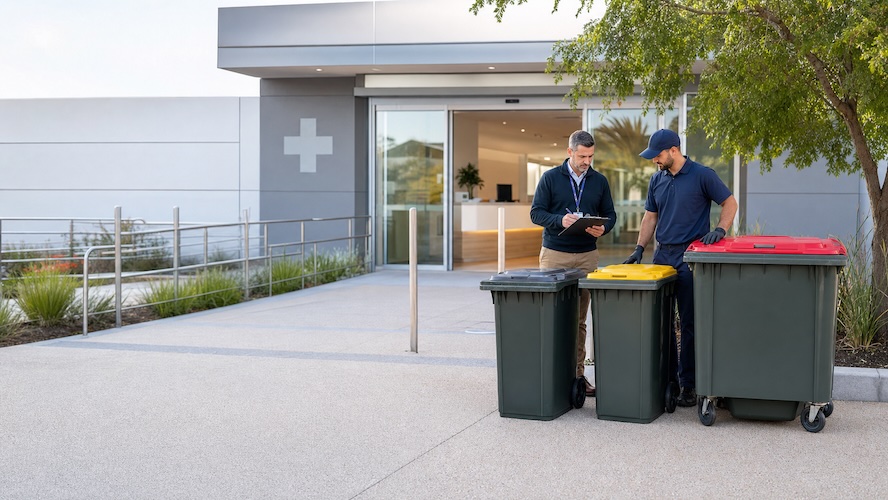
Bins in these environments should be cleaned weekly at minimum, with some areas requiring more frequent attention depending on how much waste is being handled and where the bins are stored. Regular cleaning helps reduce odour, residue build-up, pest attraction, and contamination risks around waste storage areas. For healthcare facilities, a consistent cleaning schedule is not just about appearance. It supports a cleaner, safer environment for patients, residents, staff, and visitors.
Find out how we approach this on our Healthcare Bin Cleaning page.
Schools and Educational Facilities
Schools generate significant food waste, particularly around canteens, lunch areas, staff rooms, and shared outdoor spaces.
A monthly clean works for lower-traffic areas, but canteen and high-use bins benefit from fortnightly servicing, especially during term time when usage spikes. School bins can also attract pests quickly because food waste often includes lunch scraps, drink containers, wrappers, fruit, dairy products, and leftovers. Regular cleaning helps reduce odours, improve hygiene around student areas, and keep bin storage zones more manageable for staff.
See how we support schools and universities on our Education Bin Cleaning page.
The Climate Factor
Hot weather is the great accelerator.
Bacteria multiply faster, food breaks down quicker, and odours intensify in ways that can make a once-a-month schedule feel inadequate. In Perth, this becomes especially noticeable during summer. Bins stored in direct sun, enclosed spaces, poorly ventilated bin rooms, or high-traffic waste areas may need more frequent cleaning regardless of the setting.
If your bins smell before the next collection day, attract flies, or leave liquid residue behind, your current cleaning schedule is probably not frequent enough.
Quick Reference Guide
| Setting | Recommended Cleaning Frequency |
| Household general waste bins | Monthly, or fortnightly in summer |
| Household recycling bins | Every 6 to 8 weeks |
| Food service and hospitality bins | Weekly |
| General commercial and retail bins | Fortnightly |
| Low-traffic office bins | Monthly |
| Strata and apartment bins | Fortnightly to monthly |
| Healthcare facility bins | Weekly or more often, depending on use |
| School canteen bins | Fortnightly |
| General school bins | Monthly |
Signs Your Bins Need Cleaning Now
Regardless of your schedule, you should act sooner if you notice any of the following:
- Persistent odour even after the bin has been emptied
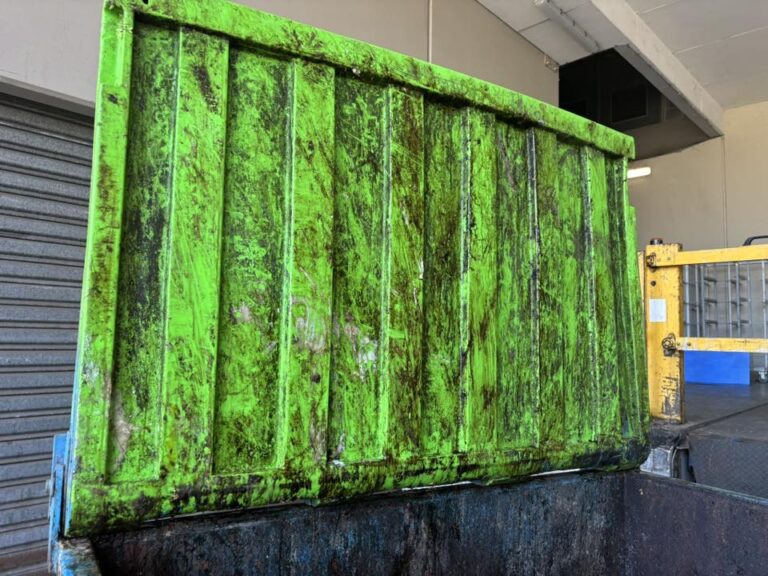
- Visible residue or mould on the interior walls
- Flies, maggots, cockroaches, rodents, or other pest activity
- Complaints from staff, tenants, neighbours, customers, or residents
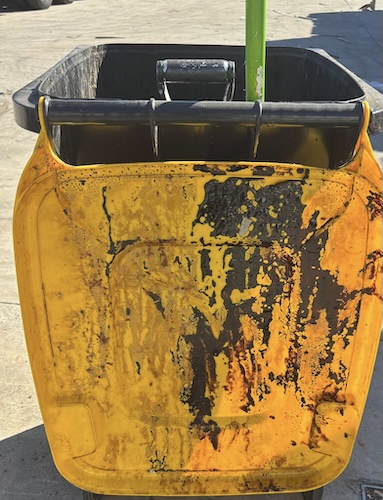
- Staining, grease, grime, or build-up on the exterior
- Liquid pooling in the base of the bin
- Bin rooms or storage areas smelling between collections
If any of these apply, do not wait for the next scheduled clean. The issue is already active.
Professional Cleaning vs DIY
For smaller household bins, a DIY clean with warm soapy water and a disinfectant spray can help manage basic odours and residue.
For commercial, strata, healthcare, education, and high-volume bin areas, professional cleaning is far more effective.
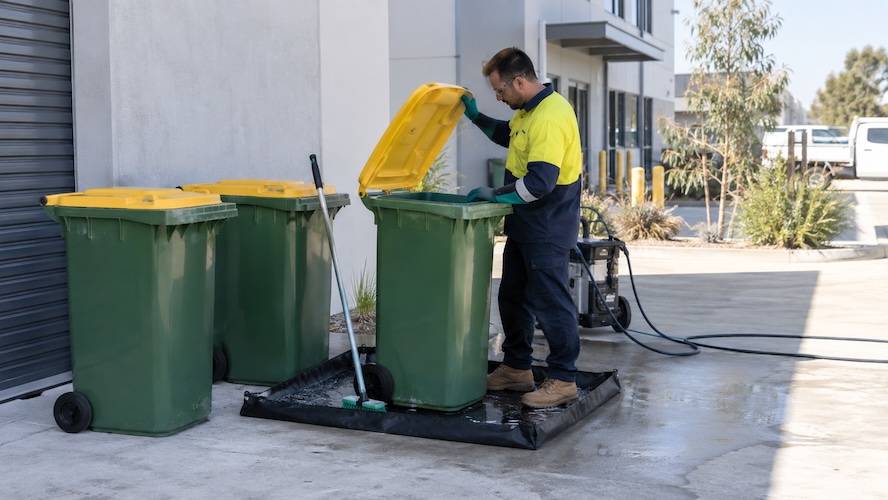
High-pressure washing and professional cleaning solutions remove build-up that a garden hose simply cannot. A professional bin cleaning service also helps manage wastewater responsibly, which is especially important for businesses, strata properties, healthcare facilities, and schools where dirty runoff can create hygiene and environmental concerns.
At Super Clean Bins, we use biodegradable cleaning solutions and responsible wastewater disposal practices to keep bin areas cleaner without simply washing contaminated water into stormwater drains or shared spaces. Professional cleaning also makes scheduling easier. Services can be aligned with council or waste contractor collection days, so bins are cleaned after they have been emptied and before odours have time to build again. If you are weighing up your options, our pricing page makes it easy to compare service frequencies and costs.
Trust The Bin Cleaning Experts
There is no single cleaning schedule that suits every bin, but the rule is simple: if your bin smells between collections, it needs cleaning more often.
Most Perth homes can usually start with monthly cleaning. Food businesses, healthcare facilities, schools, strata complexes, and high-volume commercial sites often need fortnightly or weekly cleaning to stay on top of odour, residue, pests, and hygiene concerns. Super Clean Bins provides professional bin cleaning across Perth, with flexible service frequencies, biodegradable cleaning solutions, and responsible wastewater disposal.
View our pricing or contact us to arrange a cleaning schedule that suits your site.